Frequently asked Questions and Answers
Everything you need to know about a private guided safari in Namibia or Botswana
Planning a private safari to one of Africa’s most spectacular destinations? We have put together answers to the questions our guests ask most often, covering everything from entry requirements and health precautions to what to pack and what to expect on the road.
Before you travel
A valid passport is the starting point for any trip. Make sure all travellers in your group have a passport that remains valid for at least six months beyond your planned departure date from Namibia or Botswana. If your itinerary includes a stop in South Africa or Botswana and you are travelling with children under 18, you will also need to carry an unabridged birth certificate for each child. When a child is travelling with only one of the parents named on the birth certificate, a written letter of consent from the absent parent is required.
The cost is N$ 1,600 for travelers from outside Africa, while citizens of African Union member states pay a reduced fee of N$ 1,200. Parents traveling with children can include them in the same application, submitting the request through their own account.
The risk of malaria in Namibia is higher during the summer months from December through to April, and lower during the winter season from May to October. If your safari takes you to the far north of Namibia, the Caprivi Strip, the Okavango Delta or the Victoria Falls area in Zimbabwe, malaria prophylaxis is strongly recommended. You should also wear protective clothing and use an insect repellent containing DEET. Speak with your doctor or travel clinic before departure to decide on the right approach for your itinerary.
Namibia can be visited year-round, but each season has its own character. April and May are often considered among the most beautiful months, with fresh air, a green landscape and clear skies. From June to August temperatures drop and the landscape dries out, which draws wildlife to waterholes in the north and makes game viewing excellent. September and October offer some of the best conditions for spotting animals, though the vegetation can look parched. December to March brings occasional afternoon thunderstorms and higher humidity, particularly in the centre and east. November is unpredictable but can reward visitors with the dramatic sight of the first rains of the season.
Travel insurance is not a legal requirement for entry to Namibia or Botswana, but it is strongly recommended and considered essential for any safari travel. Medical facilities in remote areas of Namibia are extremely limited, and in the event of a serious illness or injury, emergency evacuation to Windhoek or South Africa can be both necessary and costly.
A comprehensive travel insurance policy for a Namibia safari should include the following cover as a minimum: medical expenses and hospitalisation, emergency medical evacuation, trip cancellation and curtailment, loss or theft of luggage and personal belongings, and personal liability.
If your itinerary includes activities such as quad biking, white-water rafting or other adventure sports, check that your policy covers these specifically, as they are often excluded from standard policies.
We recommend arranging travel insurance at the time of booking rather than closer to departure. This ensures you are covered for cancellation costs from the moment you pay your deposit. Several specialist travel insurers offer policies tailored to African safari travel, which tend to provide more appropriate cover than standard holiday insurance.
Private Safari
A private guided safari includes all accommodations, meals, national park entrance fees, airport transfer, guide services in three languages, English, German and Afrikaans, and standard vehicle insurance. All accommodations and meals are arranged exactly as outlined in your personal tour itinerary, so you can focus entirely on the experience.
From the moment you land in Windhoek, you are in good hands. A warm Meet & Greet awaits you upon arrival, and if you book your rental vehicle through Asco Car Hire, an airport transfer is included between 07:00 and 16:30. Standard vehicle insurance is part of the package as well, with the option to upgrade to more comprehensive coverage if you prefer extra peace of mind.
Your guide Rainer brings the journey to life in the language you feel most at home in. Whether you speak German, English, French, Italian, or Spanish, you will always feel informed, comfortable, and connected to the landscape and its stories.
Entrance fees to all national parks listed in your quote are covered, and numerous activities are included along the way, ensuring that every day on the road is as rich and rewarding as possible.
To help you plan and budget your trip with confidence, here is a clear overview of what falls outside a booking for a private guided safari.
Car rental is not included in the price (this does not apply to small group tours, where vehicle costs are covered). Fuel costs are also for your own account, unless you are travelling as a passenger in the guide vehicle. Should you require a visa to enter Namibia, visa fees are your own responsibility and should be arranged prior to departure.
Any activities not booked and invoiced directly through us are excluded, as are tips and gratuities for guides, lodge staff, and other service providers. These are of course always at your own discretion and very much appreciated by the people who make your safari special. Beverages and any other personal expenses incurred during the trip are also not part of the package.
Finally, international flights to and from Namibia/Botswana are not included. We can assist with flight bookings on request. Contact us for details.
Private guided safari (self-drive vehicle) For groups of 4 to 5 guests, your guide travels with you in your own rental 4×4. This format works particularly well for families or groups of friends who want the flexibility of a self-drive vehicle combined with the knowledge and reassurance of an expert guide alongside them. The itinerary is tailored entirely to your group, your interests and your pace.
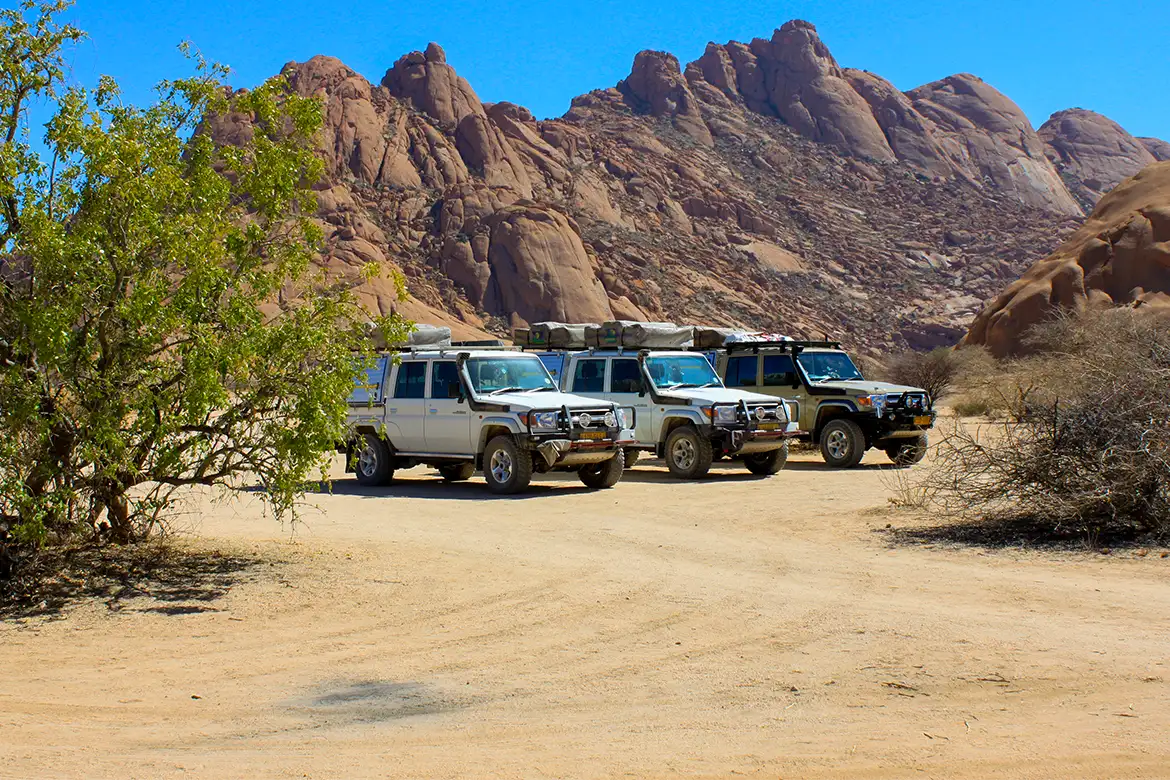
Small group guided tour (private Landcruiser) For groups of up to 7 guests, travel takes place in a dedicated private Landcruiser, purpose-built for off-road safari conditions. This option is ideal for small groups who want a fully guided experience with high-quality logistics, without the need to arrange their own vehicle. Departures follow a set itinerary, with a maximum of 7 guests on board at any time.
Not sure which format suits your group? Contact us and we will help you find the right fit.
A guided safari with Meine Namibia Safaris does not require any particular level of physical fitness. The majority of the time is spent travelling by vehicle, with stops for game viewing, walks and photography. There are no strenuous hikes or physical challenges built into the standard itineraries.
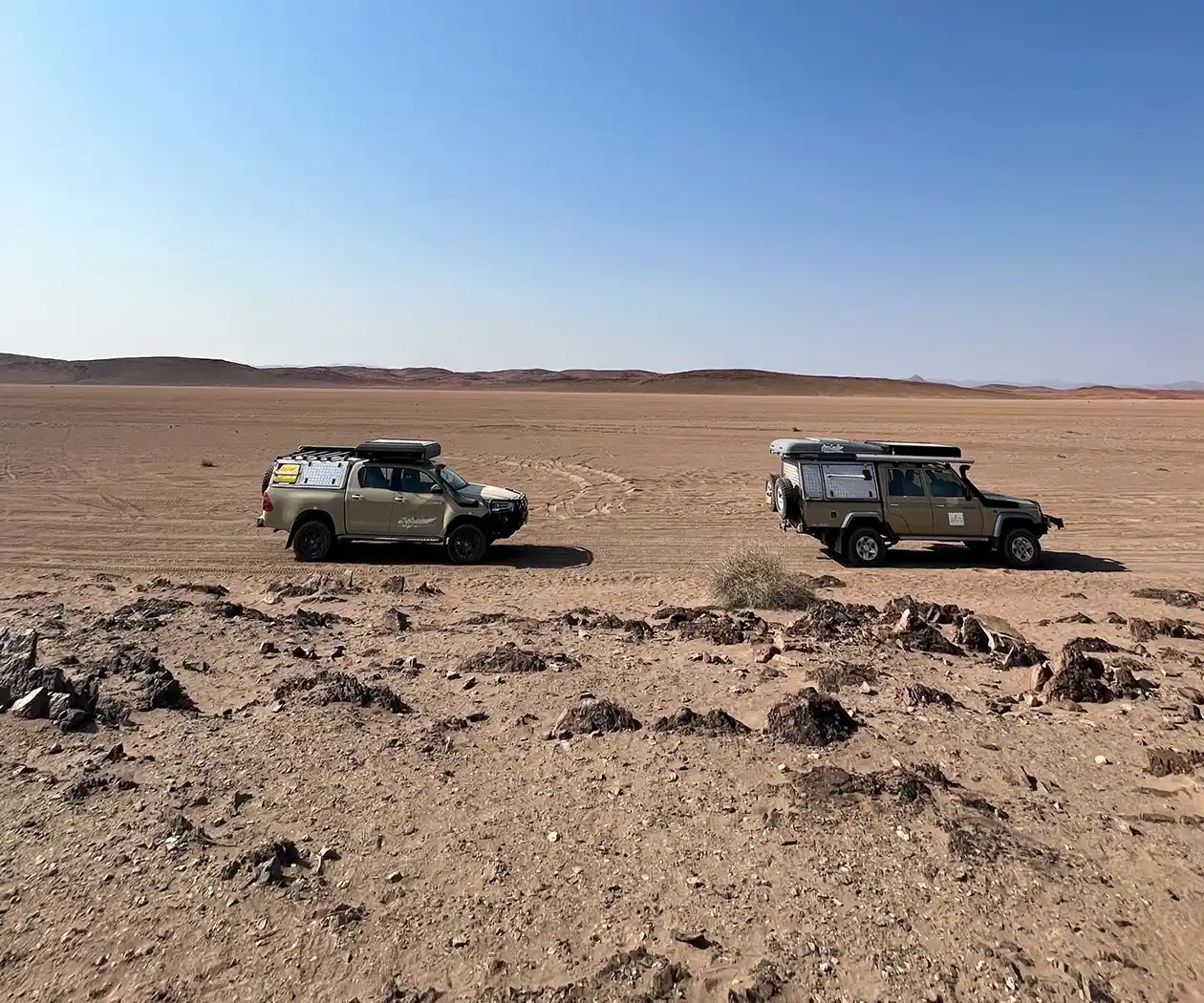
That said, some tours venture into remote, off-road terrain where the tracks can be rough and the days long. A reasonable level of comfort with extended driving on gravel and corrugated roads is helpful, as is the ability to get in and out of a high-clearance 4×4 vehicle without difficulty. Guests with limited mobility are encouraged to contact us before booking so we can advise on the most suitable itinerary and vehicle setup.
Namibia’s climate can be demanding, particularly in summer months when temperatures in the desert regions regularly exceed 40°C. Staying hydrated, using sun protection and pacing yourself are all part of a comfortable safari experience. Your guide will always factor the conditions into the day’s programme.
Children aged 6 and above generally travel well on safari, provided they are comfortable with long days in a vehicle and the occasional early start for a morning game drive. Younger children may find the pace and the heat more challenging. We recommend discussing your children’s ages and travel experience with us at the time of enquiry so we can suggest the most suitable itinerary.
Families travelling with children under 18 through South Africa or Botswana should note that an unabridged birth certificate is required per child at border crossings, in addition to a valid passport. If only one parent is travelling with the child, a notarised letter of consent from the absent parent may also be required. Check the current entry requirements for your nationality before departure.
Reduced pricing is available for children on selected tours. Contact us for details.
Money and banking
Namibia uses the Namibian Dollar (N$), which is pegged one-to-one with the South African Rand. The Rand is accepted as legal tender in Namibia, though the Namibian Dollar cannot be used in South Africa. If you want to arrange currency before you leave home, buying Rand is the practical option as the Namibian Dollar is rarely available at banks outside the country. MasterCard and Visa credit cards are generally accepted in Namibia, and standard debit cards (Maestro) can be used at most bank ATMs, with the exception of Bank Windhoek. Always notify your bank before travelling so that your card is not blocked for overseas transactions.
In Botswana, Visa credit cards are the most widely accepted form of payment, and standard debit card withdrawals are generally not possible. It is recommended to bring USD or EUR cash for your Botswana leg. If your itinerary includes a border crossing into Zimbabwe to visit the Victoria Falls, you will need US Dollars for purchases and entry fees there.
Getting around
Drive on the left-hand side of the road, and all road signs are in English. Seat belts must be worn at all times, and using a mobile phone while driving is prohibited. The speed limit on tarred roads outside of towns is 100 km/h, dropping to 80 km/h on gravel roads. In built-up areas the limit is 60 km/h.
Namibia is full of stunning landscapes and incredible sights, but driving at night can be tricky. Animals often wander onto the roads after dark, and it’s not always easy to see them in time. Roads aren’t always well-lit or perfectly maintained, which can make nighttime driving even more challenging.
The country’s wide-open, sparsely populated areas also mean that fuel stations, hotels, and emergency help can be few and far between. For this reason, it’s smart to plan your driving for daylight hours whenever possible.
Driving in Namibia is an amazing adventure, but sticking to daytime travel helps keep you and the wildlife safe. Plus, you’ll get the chance to really soak in the beauty of this incredible country without worrying about the risks that come with night driving.
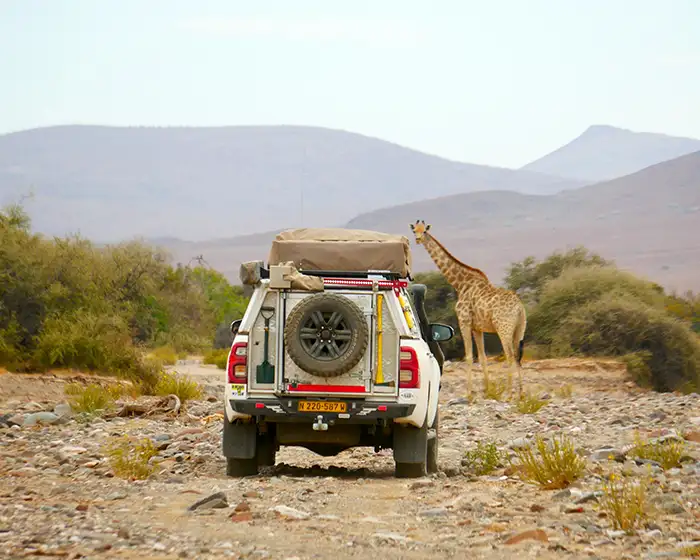
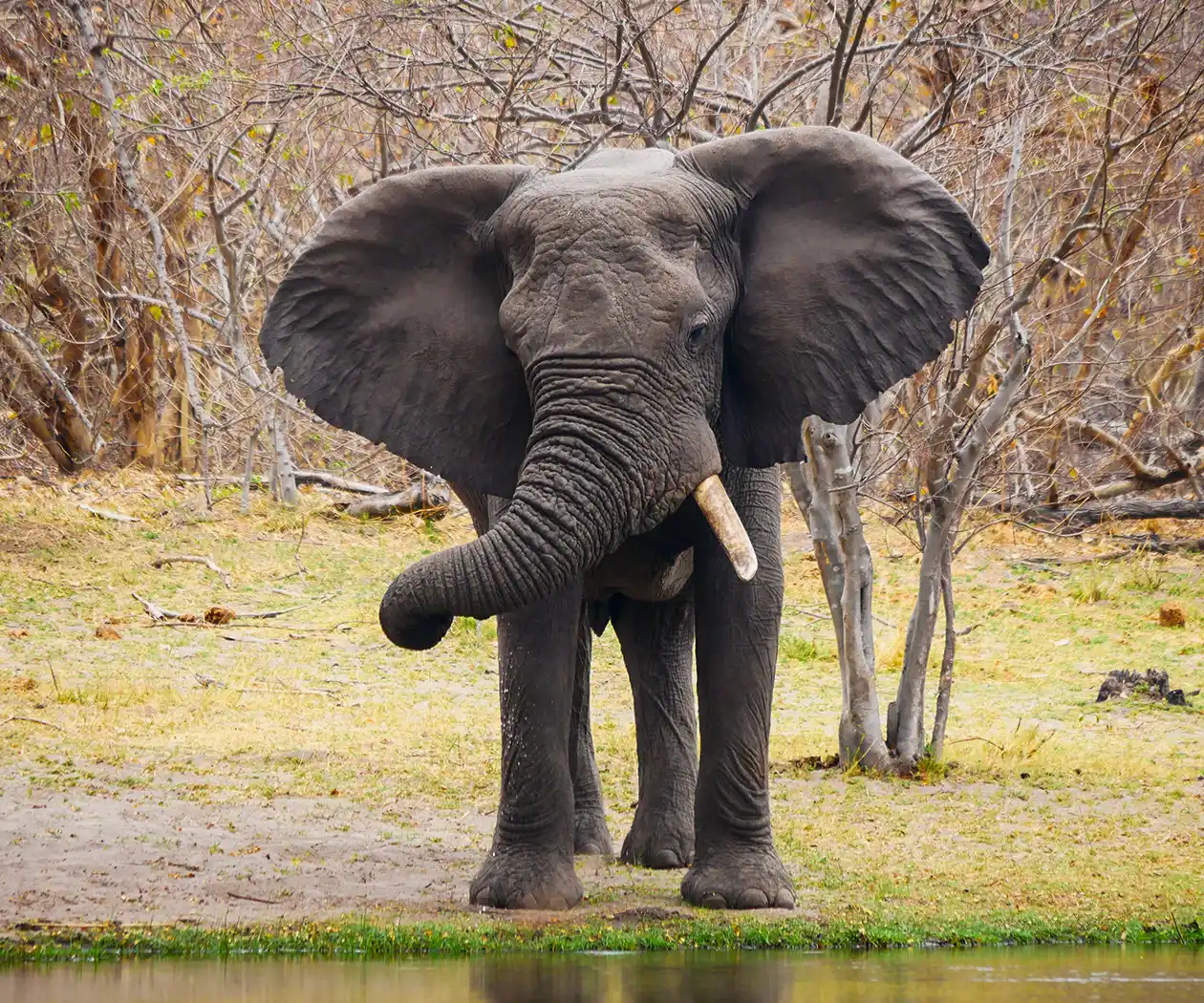
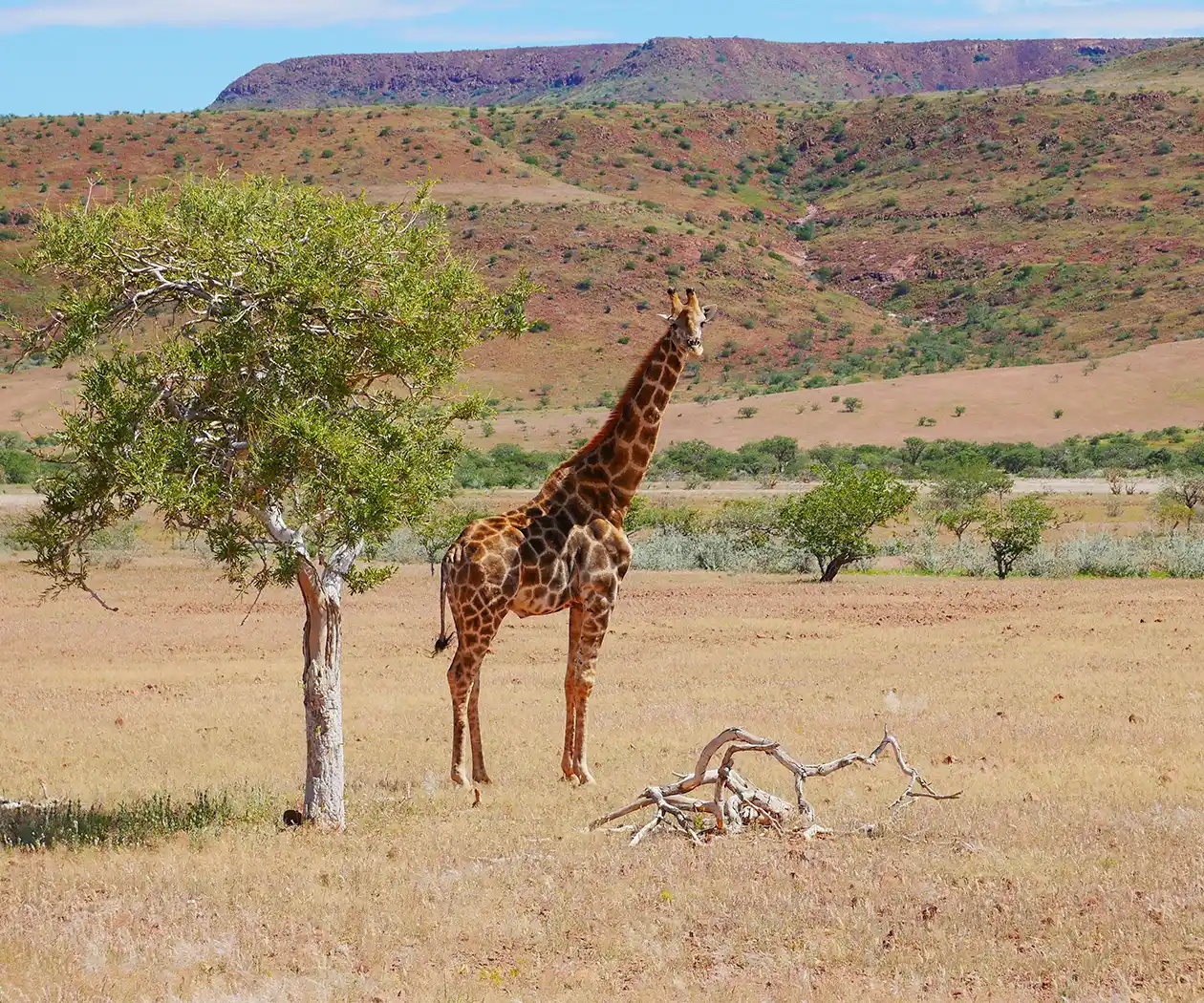
Driving through Namibia’s wild landscapes often brings unexpected wildlife encounters, elephants, giraffes, zebras, and antelopes may appear on the road. These moments are exciting but call for caution.
Be especially alert at dawn and dusk when animals are most active. If you see wildlife, slow down, keep a safe distance, and avoid honking. Wait patiently for them to move on, ensuring both your safety and theirs.
Food, water and comfort
Restaurant food in Namibia is predominantly European in style and is generally of a high standard. Meat features prominently, with steak from a variety of animals a common menu highlight. Most camps and restaurants also offer vegetarian options and seafood. Supermarkets stock a good range of fresh fruit and vegetables (though choice becomes more limited in remote areas), along with canned foods, pasta, rice and bread. Most products are imported from South Africa.
Tap water in main towns is generally safe to drink, though it can have a slightly metallic taste when piped over long distances. Water from natural sources should be purified before drinking, although springs and dry riverbeds rarely cause problems. Filtered and bottled water are readily available in most towns, camps, lodges and hotels if you prefer an alternative.
Practical essentials
Dress codes in Namibia are relaxed. During the day it is hot, so lightweight, loose-fitting clothes in natural fabrics such as linen or cotton are ideal. They breathe well in the heat and dry quickly. If you are visiting during the winter months (roughly June to August), evenings can turn cold and temperatures in some desert areas drop below freezing, so pack at least one warm layer. Comfortable shoes and practical casual wear will see you through most situations.
Namibia rewards those who venture beyond the cities. The Namib Desert stretches for over 2,000 km along the Atlantic coast and is one of the world’s most ancient and visually striking landscapes. Etosha National Park is home to lions, desert-adapted elephants and the rare Hartmann’s Mountain Zebra, among many other species. The Fish River Canyon is one of Africa’s most impressive geological features, while the Kalahari Desert has a haunting beauty all its own. The coastal town of Swakopmund is worth a visit for its German colonial architecture, cultural character and lively Oktoberfest celebrations. The capital Windhoek makes a comfortable base at the start or end of any itinerary.
In northern Botswana, Chobe National Park is famous for its enormous elephant population and exceptional river safaris. Cruising along the Chobe River offers excellent opportunities to see elephants, hippos, crocodiles, and a rich variety of birdlife up close.
Moremi Game Reserve combines diverse habitats, including floodplains, lagoons, woodlands, and savannahs, making it one of the country’s premier wildlife destinations. The reserve is particularly known for sightings of big cats, African wild dogs, and many other rare and iconic species.
The Makgadikgadi and Nxai Pans present a striking contrast to Botswana’s lush waterways. These vast salt flats and seasonal wetlands offer breathtaking sunsets, incredible stargazing opportunities, and, during certain times of the year, one of Africa’s largest zebra migrations.
Stretching across much of the country, the Kalahari Desert is a land of dramatic red sand dunes and endless open spaces. It is home to the San people, one of the oldest cultures in the world, as well as unique wildlife such as meerkats and other species specially adapted to this arid environment.
Booking your safari
Meine Namibia Safaris is an official member of the Namibian Tourism Board (NTB), a government institution that oversees quality standards in the country’s tourism sector. The company is also a member of TASA (Tourism Association Southern Africa), which monitors compliance with rules and standards across the southern African travel industry. Together these memberships offer peace of mind that your trip is in the hands of a regulated and reputable operator.
Click here to read and download the ANVR Traveller Terms and other important information. On the booking form, it is required that you indicate that you are aware of and agree with the ANVR Traveller Terms. (ANVR Traveller Terms for Package Travel or the ANVR Booking Terms for single travel services and/or ANVR Linked Travel Arrangement Terms in addition to the ANVR Booking Terms).